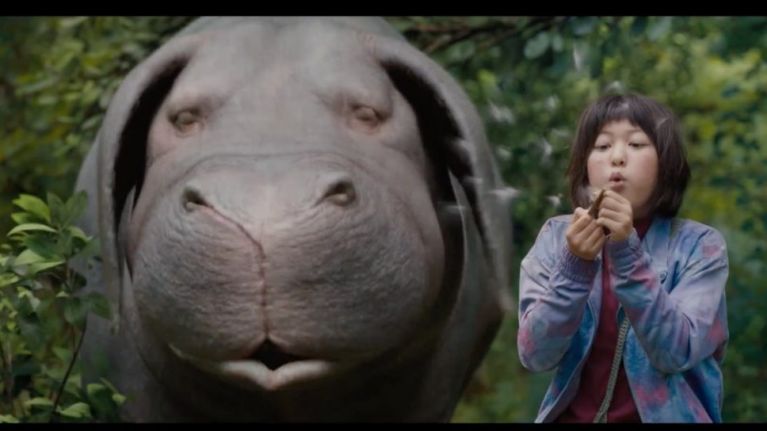
Similar to many of my classmates, I have never watched or heard of the movie Okja. To be fair, though, I don’t watch tv or movies often so I am likely not the studio’s target demographic. I like to read plots of movies before I see them. I know, I know – I ruin films for myself, my boyfriend already tells me so. However, I find that doing this helps me prepare for the gruesome scenes that turned my stomach and the heartwrenching scenes that brought tears to my eyes. I’ll admit I’m a softie when it comes to animals – I’ve been vegetarian and plant-based for 7 years, a choice I made days before turning 16.
Movie Summary
A young girl named Mija, who lives in South Korea, has been taking care of her pet of sorts, Okja. Okja is a large pig-like animal and the large corporation Mirando sees Okja’s species as being a great source of meat that will be more environmentally friendly than traditional factory-farmed meat. The company takes Okja back to New York and exploits her as a tool in their bigger plan of maximizes meat and maximizing profits. Mija shows a lot of bravery for a girl her age and she fights ruthlessly to get Okja back. Right before Okja is about to be slaughtered, Mija saves Okja with the power of a photograph showing them together from a young age. The movie ends with a group of anti-Mirando organizers who plan to disrupt a large important company meeting.
How are nature and culture represented in this film?
Nature and culture are represented through the greed of the meat industry and overpopulation of people, which is increasing the meat need. Culture caused overpopulation and nature is being exploited in order to satisfy the need. This reminds me of the common saying “If animals aren’t meant to be eaten, why are they made of meat?” This is seeing animals from an exploitive view instead of a harmonious point of view in which humans, animals and all the rest of the Earth all benefit from each other.
How do we see issues of environmental disasters and crises reflected in “Okja”? How are ecoactivists portrayed? How are corporations portrayed? Where does middle ground exist?
The amount of blood pouring out of the animal while it is being cut open surely correlates to mass amounts of pollution from slaughterhouses, which largely contribute to climate change. Ecoactivists are portrayed similarly to the way vegan and vegetarian protestors are portrayed – as extremists who want to ruin everything for everyone. The corporations portrayed themselves as environmentally conscious, wanting to help feed people and trustworthy. Middle ground exists where food is raised locally and without harm. Western culture needs to learn from the tribes whose land we are on and learn how the tribes have continued to sustain the land and food for longer than we can comprehend.
How are animals represented in this film and what is their relationship to humans?
To Mija, Okja is a friend. To the people who work for the meat industry though, Okja is simply meat and profit.
Okja and Veganism

Apparently Okja filmmaker Bong Joon Ho became vegan while conducting research for the film. The big question is, is he still vegan? It is a large issue within vegan culture for people to become vegan or vegetarian but quit shortly after starting. I’m curious, did this movie impact your eating at all?
 Caitlyn's Blog
Leave a comment