
Film Summary
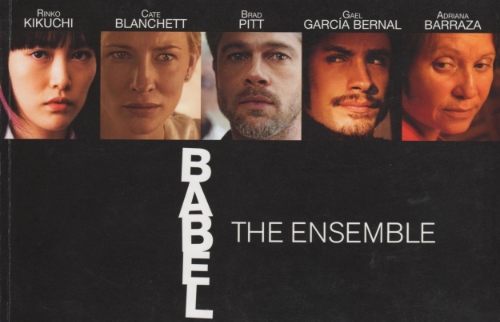
I, likely along with many of my classmates, have never heard of the movie Babel before. When I first read about the background of the film, I got excited because I am a big fan of movies with ensemble casts, especially when those movies have a surprising connection between the main characters. Babel focuses on four different main characters. The beginning of the film takes place in Morocco, where two young boys, sons of a man named Hassan, are playing with his gun. They shoot at a bus and critically wound American citizen Susan, who is with her husband, Richard. It soon cuts to the United States, where Susan and Richard’s nanny, Amelia, is faced with taking the children to Mexico for her son’s wedding, since no one else can watch the children. After being abandoned with the children in the desert with no food or water, Amelia decides to turn herself in to border patrol in order to save the children’s lives, which leads to her deportation from the United States. Meanwhile Richard and Susan are vacationing because they recently lost their third child and have not had the strongest marriage or communication with each other lately. In Japan, Chieko is a Deaf teenager whose mother recently commited suicide; all she wants is love and attention. It is revealed that Chieko’s father, Yasujiro, gifted Hassan the gun during his hunting trip in Morocco, presumably the same gun Chieko’s mother killed herself with.
Critical Analysis
For an insight into critical analysis of the movie, I looked to “Cultural and Urban Transformation: From ‘Babel’ to ‘Ecumenopolis’” By Dr. Müberra Yuksel. One of the points of the film Yuksel writes about that is very important when it comes to critical analysis is researching the background of the movie and where the title or headline comes from. Watching the film, I was curious as to why the film was named Babel. According to Lexico, Babel means “a confused noise made by a number of voices.” I thought that the film was named Babel simply because of the language barriers shown in the film and the fact communication is such a key issue in the film. However, Yuksel’s research goes beyond this and they write about the film’s title being derived from the story of Tower of Babel. In this story, “God punishes mankind for the arrogance and pride in attempting to build a tower leading to the Heaven.” As a result of this, God separated people into groups with differing values, cultures and languages. In this context, Babel does not refer to babbling, which was my original theory. This shows how important that deep research is for a full understanding of a media piece, which is needed for a full critique.
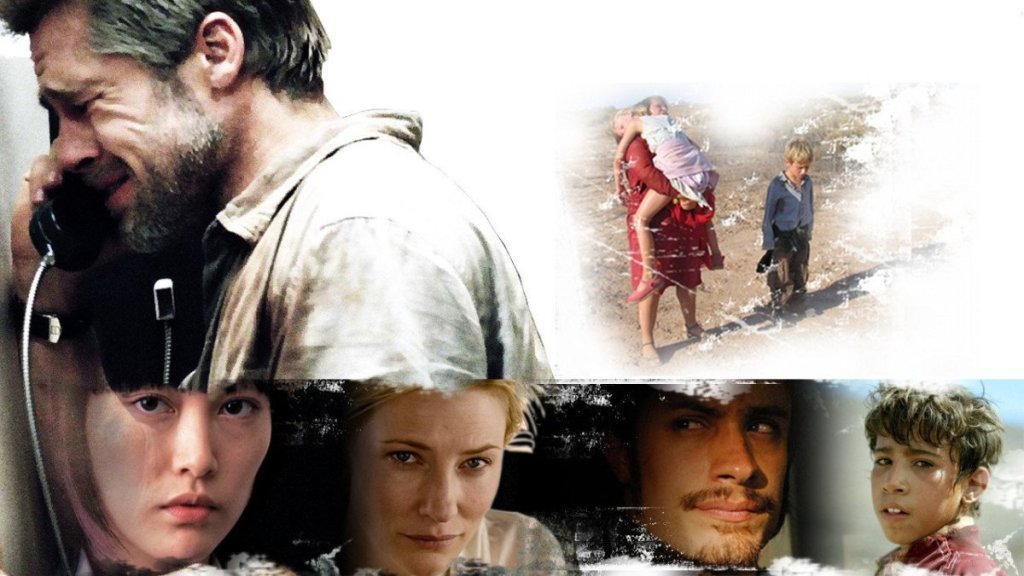
Many of my classmates and I felt saddened by the film. I mean, how could we not feel that way? With loss, grief, emptiness and disconnection, the film makes us feel that way. Despite this, Yuksel writes that the movie’s director did not intend for the film to only be sad, but to be hopeful at the end. This is shown through the translator being by the American couple’s side despite potentially losing his job and through the Japanese officer not taking advantage of Chieko, but seeing she is merely hungry for love. This is the director’s way of showing that we are all more connected and capable of communication than we think.
 Caitlyn's Blog
Leave a comment